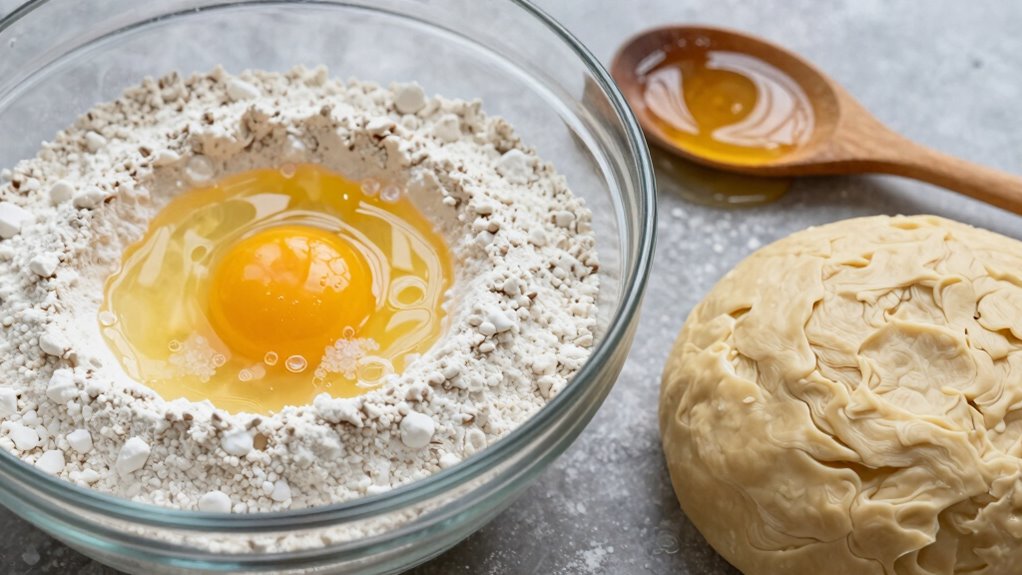

From the start, your ingredients work together to build the dough’s structure. Flour forms a protein network that gives elasticity, and water hydrates these proteins, helping gluten develop. Leavening agents like yeast or baking powder produce gas, which gets trapped by this gluten network, creating bubbles. This early structure influences how well your baked goods rise and hold their shape. Keep exploring to discover how each element affects your baking’s final texture and volume.

Get baking supplies delivered free with Prime
- Fast, free delivery on millions of items
- Prime Video, Amazon Music and more included
- Member-only deals all year
Key Takeaways
- Flour proteins develop gluten networks through mixing and kneading, creating the foundational structure for dough.
- Hydration activates gluten and starches, strengthening the dough’s framework early in the mixing process.
- Leavening agents produce gases that are trapped by the forming protein network, building internal structure before baking.
- Proper dough development ensures elasticity, aiding in gas retention and maintaining shape long before oven heat.
- Ingredient interactions, like fat and sugar, influence gluten formation and dough stability during initial mixing stages.
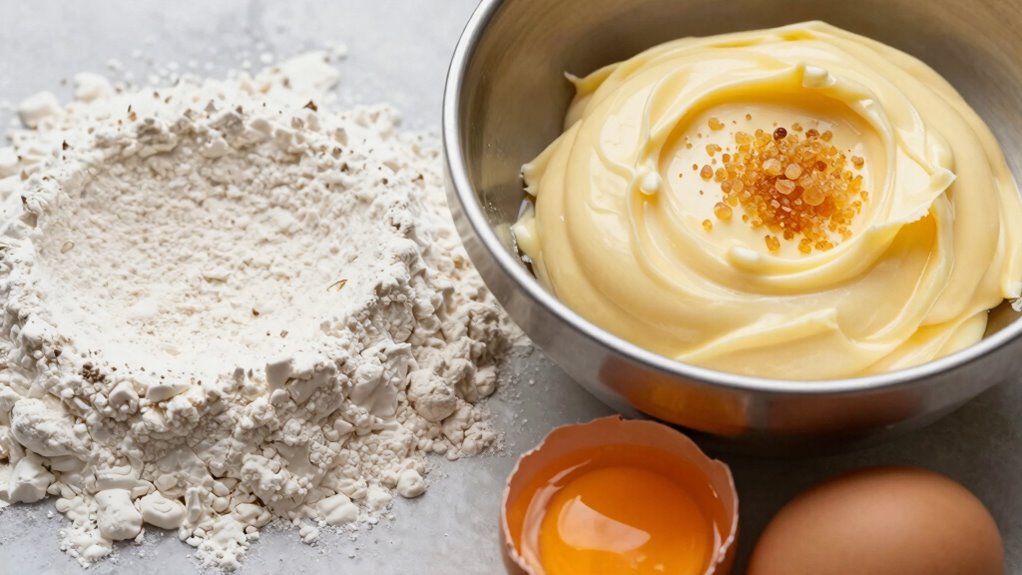
Dough aeration is another *essential* process that begins long before the heat hits the oven. As you mix and knead, tiny air bubbles become incorporated into the dough, creating pockets of gas that expand during baking. Proper dough aeration is *important* for giving your baked goods lightness and volume. Techniques like gentle folding or specific mixing methods can help trap more air without deflating the dough. The type of ingredients you include, such as leavening agents like baking powder or yeast, interact with this aeration process, producing carbon dioxide that further inflates the dough. This initial gas retention is what ultimately determines whether your bread or pastry will be dense or fluffy once baked. Additionally, understanding how protein networks form and function helps in achieving the desired texture and rise in your baked goods. Recognizing the role of gluten development can also influence how well your dough retains gases and achieves the perfect structure. Developing a balanced dough structure early on ensures optimal gas retention and a better overall rise during baking. A thorough understanding of ingredient interactions can further improve how well your dough maintains its structure during baking. Moreover, controlling dough elasticity can help maintain the shape and prevent collapsing during proofing and baking.
As an affiliate, we earn on qualifying purchases.
Frequently Asked Questions
How Do Ingredient Interactions Affect Dough Stability Before Baking?
You influence dough stability through ingredient interactions like gluten network formation and fat distribution. When you mix flour and water, gluten develops, providing elasticity and strength, while fats coat flour particles, tenderizing and preventing excessive gluten development. Properly distributing fats helps maintain dough’s structure, preventing it from becoming too sticky or tough before baking. These interactions guarantee your dough remains stable, manageable, and ready for a perfect bake.
What Role Does Temperature Play in Ingredient Structure Formation?
You might think temperature doesn’t matter much before baking, but it actually influences chemical reactions that shape your dough’s structure. As temperature fluctuates, enzymes activate or slow down, affecting gluten development and leavening agents. Controlled temperature guarantees consistent reactions, helping your dough gain stability. Without proper temperature management, unpredictable chemical reactions can weaken your dough, leading to uneven texture and compromised structure, even before it hits the oven.
Can Ingredient Layering Influence Final Baked Texture?
Layering ingredients can definitely influence your final baked texture. When you layer, you promote better flavor blending and nutrient distribution, which enhances the overall mouthfeel. Properly arranged layers allow heat to distribute evenly, creating a uniform crumb or crust. This technique can result in a more tender, moist interior or a crisp exterior, depending on the recipe. So, thoughtful layering helps you achieve the desired texture while enriching flavor and nutrients.
How Does Moisture Content Impact Early Structure Development?
Moisture content greatly influences early structure development by affecting hydration levels and gluten formation. Higher hydration levels allow flour proteins to absorb more water, promoting stronger gluten networks. This results in better dough elasticity and structure even before baking. Conversely, low moisture inhibits gluten development, leading to a weaker framework. As a result, controlling moisture content guarantees ideal hydration and gluten formation, giving your baked goods the desired texture and stability from the start.
Do Different Flour Types Alter Initial Structural Properties?
Imagine each flour type as a different artist’s brush, shaping your dough’s initial canvas. You’ll find that bread flour with high gluten content forms a sturdy gluten network, giving your dough resilience, while pastry flour, with less gluten, creates a tender, delicate structure. Starch gelatinization begins early, setting the stage. So, choosing the right flour influences how well your dough develops initial strength and flexibility, impacting your final bake.
As an affiliate, we earn on qualifying purchases.
Conclusion
You might think the magic happens only in the oven, but in reality, it starts long before. Every ingredient you add—flour, eggs, butter—begins forming the foundation of your baked masterpiece. This process isn’t just chemistry; it’s a demonstration of patience and precision. Believing that baking is only about heat diminishes the artistry involved. When you understand how ingredients build structure early on, you realize that great baking is a quiet, powerful act—one that’s been unfolding from the moment you started mixing.
leavening agents baking powder yeast
As an affiliate, we earn on qualifying purchases.
As an affiliate, we earn on qualifying purchases.
As an affiliate, we earn on qualifying purchases.
Halloween Picks
halloween
As an affiliate, we earn on qualifying purchases.