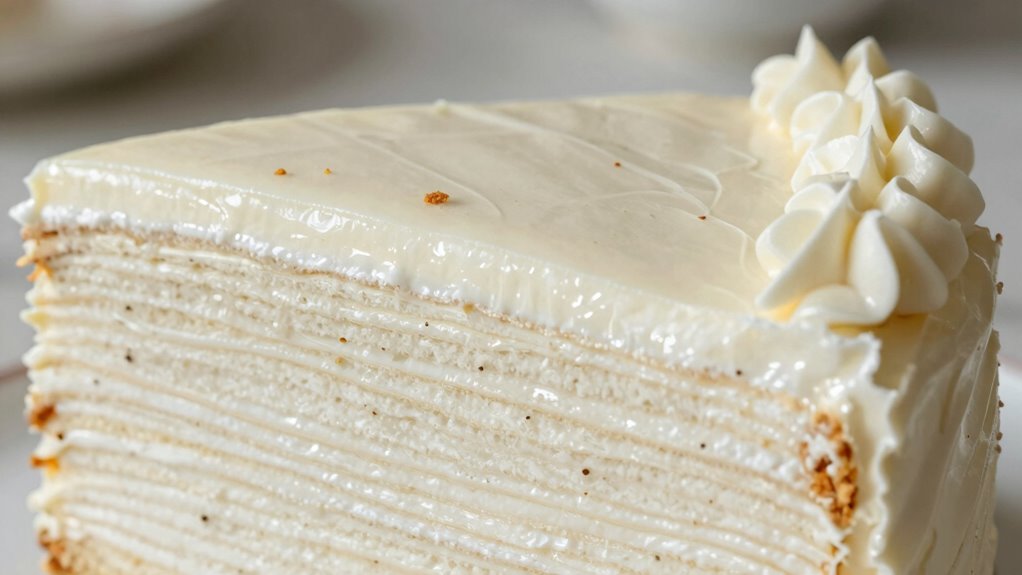
To get sharp cake edges, you need to start with better layers because they provide a strong, smooth, and stable base for your design. Well-chilled, even layers resist tearing and deformation, helping you achieve clean, defined edges. Properly prepared layers prevent imperfections from showing through the fondant and guarantee your cake holds its shape. When you focus on quality from the beginning, every step towards a professional finish becomes easier. Keep going, and you’ll uncover more tips to elevate your cake game.
Key Takeaways
- Better layers provide a stable, firm base essential for creating sharp, clean cake edges.
- Even, smooth layers prevent imperfections from showing through the fondant, enhancing edge definition.
- Chilled, high-quality layers retain shape, making precise trimming and sharp edges easier to achieve.
- Proper layer preparation reduces deformation and ensures consistent surface for clean cuts.
- Firm layers support precise fondant application, resulting in sharper, more professional-looking edges.
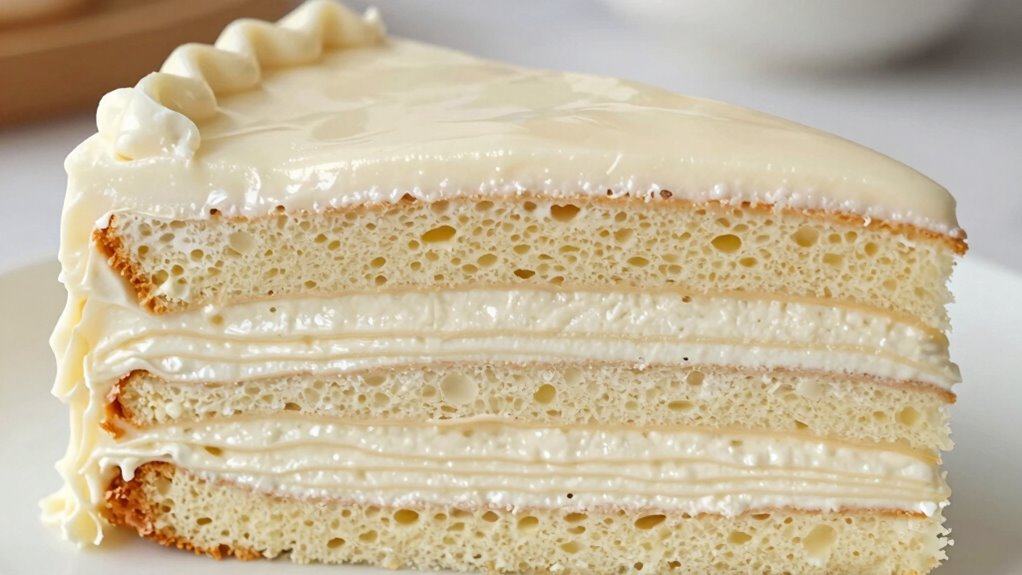
Have you ever wondered why some cakes have perfectly sharp edges while others look lopsided or rounded? The secret often lies in the quality of your layers and how you prepare them. When you start with better layers, you set a strong foundation for a clean, professional-looking cake. One essential step in achieving those crisp edges is proper fondant smoothing. Before applying fondant, you need to ensure your layers are even and smooth. Any bumps or uneven spots will show through, making it difficult to get that sharp finish. Using a fondant smoother helps press out air bubbles and creases, creating a sleek surface that’s perfect for sharp edges. But a smooth surface alone isn’t enough; temperature control plays a crucial role in this process. If your cake is too warm, the fondant can become sticky and difficult to work with, causing it to tear or develop wrinkles. Conversely, if it’s too cold, the fondant might crack or not adhere properly. You want your cake to be at a consistent, cool room temperature to make fondant smoothing easier and more effective. Proper layer quality is essential, as it provides the stability needed for those sharp edges to hold their shape over time. When you’re working with your layers, take time to chill them properly before applying fondant. Cold layers hold their shape better, which helps in creating those defined edges. As you cover your cake, work quickly but carefully, using your hands or tools to gently smooth the fondant from the top down and outwards. This helps eliminate excess air and ensures an even surface. Remember, the more controlled your temperature, the less likely your fondant will tear or develop imperfections. If your kitchen is warm or humid, consider chilling the cake periodically during the process to maintain ideal working conditions. Achieving those sharp edges also depends on the techniques you use during the smoothing process, which can make a significant difference in the final appearance. Additionally, paying attention to environmental conditions can help prevent common issues and improve your overall results. Proper layer preparation, including the choice of ingredients and baking method, also influences the stability and firmness of your layers, impacting your ability to create sharp edges. The tools you select for smoothing and trimming can further enhance precision and help achieve a professional finish. Getting sharp edges isn’t just about the fondant; it’s about the entire process, starting from the quality of your layers. When your layers are firm, even, and properly chilled, they form a solid base for your fondant. This stability allows you to achieve those clean, sharp edges that make your cake stand out. So, focus on proper layer preparation, control your working environment’s temperature, and use the right smoothing techniques. These small but essential steps will help you produce a cake with flawless, sharp edges every time.
As an affiliate, we earn on qualifying purchases.
Frequently Asked Questions
How Do Layer Quality Affect Cake Edge Sharpness?
Layer quality directly impacts cake edge sharpness because stable layers prevent shifting and uneven settling. When your layers have good cake stability, they stay even and firm, resulting in sharp edges. Additionally, a fine crumb texture ensures the layers cut cleanly without crumbling, which enhances the sharpness of the edges. Poorly baked or crumbly layers tend to be softer and less stable, causing rounded or jagged edges instead.
What Tools Help Achieve Better Cake Layers?
You can achieve better cake layers with essential tools like a serrated cake leveler and a straight ruler for precise cake leveling. These tools help create even, flat layers, reducing uneven edges that compromise sharpness. Using fondant smoothing tools ensures a sleek finish, but starting with perfect layers is key. Invest in quality tools, and you’ll notice your cake edges become sharper and more professional-looking, confirming that good tools make all the difference.
Can Baking Temperature Influence Layer Structure?
Yes, baking temperature greatly influences your cake’s layer structure. If your oven is poorly calibrated, it can cause uneven baking, leading to dense or uneven layers. Maintaining the correct baking temperature guarantees even heat distribution, promoting consistent rise and a smooth, sharp edge. Always check your oven calibration regularly, and adjust the temperature as needed to achieve the perfect layer consistency and sharp edges in your cake.
How Does Cake Cooling Impact Edge Sharpness?
Cooling your cake properly helps maintain sharp edges, especially when you’re applying fondant smoothing or other decorating techniques. If you cool it too quickly or unevenly, the edges can become dull or cracked. Let the cake cool completely on a wire rack, ensuring even temperature distribution. This way, your fondant will glide smoothly over the edges, and your decorations stay crisp and professional-looking, giving your cake a polished finish.
Are There Specific Recipes for Perfect Layers?
Yes, you can use specific recipes designed for perfect layers, often featuring precise ratios and stable textures. To enhance your cake’s structure, apply frosting techniques that support even layering and sharp edges. Experiment with ingredient substitutions like buttermilk or yogurt to improve crumb and moisture. These adjustments help create uniform, sturdy layers that cut cleanly, giving you sharp edges and a professional appearance.
As an affiliate, we earn on qualifying purchases.
Conclusion
Remember, every sharp edge begins with a solid foundation—your cake layers. When you focus on crafting those perfect layers, you set the stage for clean, beautiful edges that wow at every slice. Think of your cake as a blank canvas—without a sturdy base, even the most skilled artist can’t create their masterpiece. So, start strong, layer wisely, and let your cake’s edges tell the story of your careful craftsmanship. After all, isn’t it the details that make the difference?
As an affiliate, we earn on qualifying purchases.
professional cake decorating tools
As an affiliate, we earn on qualifying purchases.
As an affiliate, we earn on qualifying purchases.