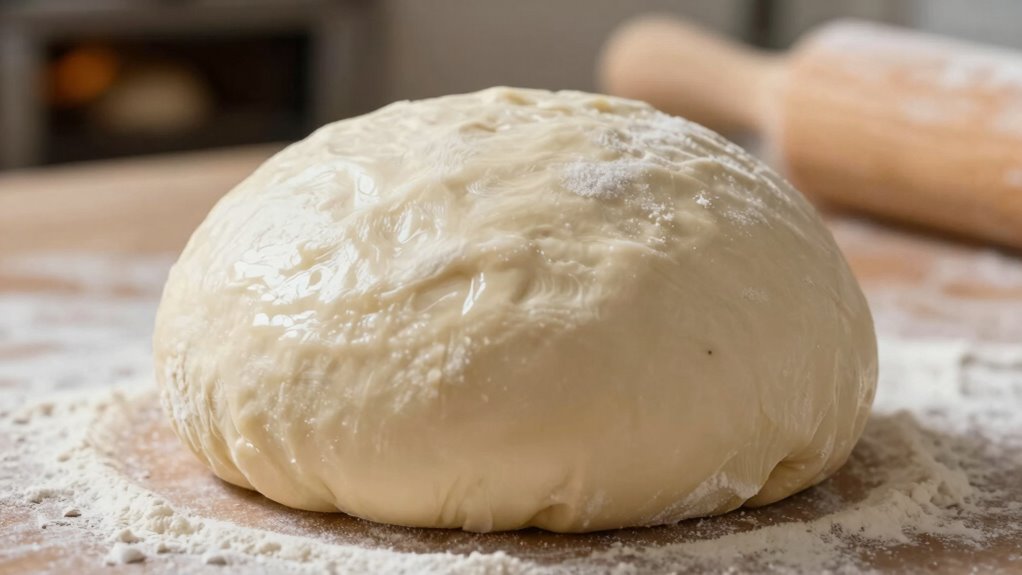
Even if your dough looks smooth, it might not bake well if it hasn’t gone through proper fermentation. A smooth surface only shows kneading, not the development of flavor or gluten strength. Over- or under-fermentation can lead to dense or flat bread, despite its appearance. Factors like ingredient quality and fermentation timing play a big role in the final result. Continue exploring to uncover how these hidden issues can impact your bread’s success.
Key Takeaways
- A smooth surface often indicates proper kneading but doesn’t guarantee adequate fermentation or gluten development.
- Insufficient or excessive fermentation can weaken gluten structure, leading to poor oven spring despite a smooth appearance.
- Ingredient quality and freshness significantly influence dough strength and final bake quality, regardless of surface look.
- Overproofed dough may collapse or become dense, even if it appears smooth before baking.
- Monitoring fermentation signs like aroma and dough feel is more reliable than surface appearance alone.
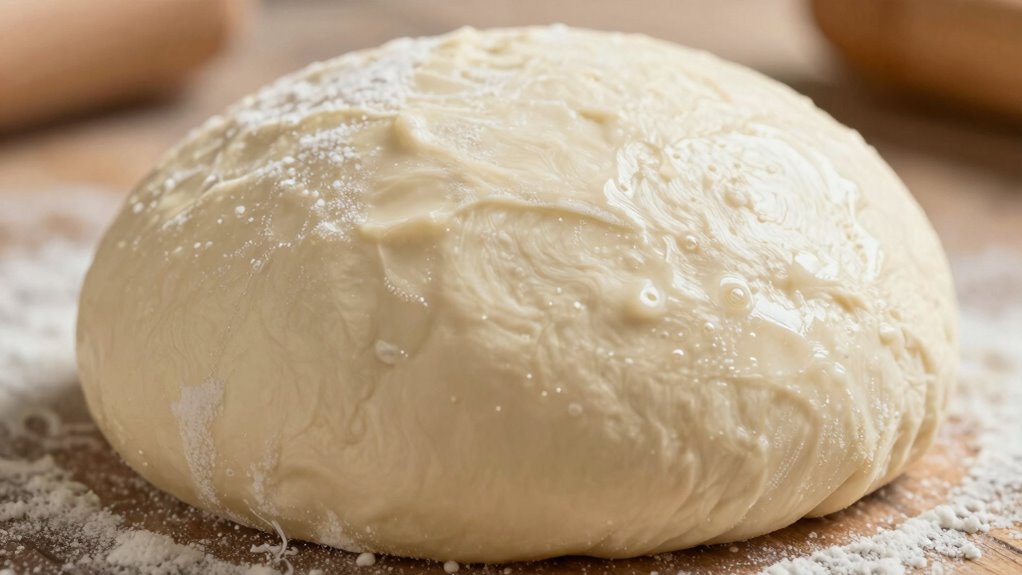
Even if your dough ball looks perfectly smooth, it doesn’t guarantee a good bake. A shiny, uniform surface might make you think you’ve nailed the kneading process, but the secret to a successful bake lies deeper. One common reason your dough might look flawless but still results in a poor bake is fermentation issues. If your dough hasn’t fermented properly, it won’t develop the necessary gluten structure or flavor. Under-fermented dough can feel dense and lack the airy texture you want, while over-fermented dough can collapse or become overly sour. The key is to monitor your fermentation carefully, making sure your dough rises adequately without overproofing. Additionally, proper fermentation techniques can help ensure your dough develops the right flavor and texture throughout the process. Ingredient quality also plays an essential role in the final outcome. Using low-quality flour or ingredients that aren’t fresh can lead to a dough that looks smooth but doesn’t bake well. High-quality flour contains the right balance of proteins and gluten-forming potential, which influence how well your dough develops during fermentation and baking. If your flour is stale or has been stored improperly, it might not provide enough strength or elasticity, resulting in a flat or dense loaf despite the smooth appearance. Similarly, using old or low-quality yeast can hinder fermentation, leading to insufficient rise and poor oven spring, regardless of how perfect your dough looks before baking. You might be tempted to focus solely on kneading and shaping, but the real magic happens during fermentation and ingredient selection. A smooth dough ball can be a sign that you’ve kneaded it thoroughly, but it doesn’t reflect how well it will perform in the oven. Proper fermentation ensures the dough develops flavor, gluten strength, and the desired texture. If your dough seems perfect on the surface but doesn’t turn out right, ask yourself if you’ve allowed enough time for fermentation or if your ingredients are up to standard. Monitoring fermentation and ingredient quality are crucial for consistent results. Remember, the gluten network is fundamental to achieving good oven spring and a light crumb, and it develops during proper fermentation. When you understand the importance of fermentation timing, you’ll be better equipped to troubleshoot why your dough isn’t baking up as expected. In the end, a beautifully smooth dough is just the surface. To improve your baking results, pay close attention to fermentation times and ingredient quality. Don’t rely solely on appearance; instead, focus on how your dough feels, smells, and ferments. These signs will guide you toward a better bake. Remember, consistent quality ingredients combined with proper fermentation are the foundation of good bread. When these elements align, your dough will not only look good but also produce the fluffy, flavorful bread you’re aiming for.

LONICERA Digital Cooking Thermometer for Bread, 5-Inch Probe, Red
- Probe Length: 5-inch food-grade probe
- Waterproof Design: IPX6 waterproof for easy cleaning
- Fast & Accurate: Reads in 2-3 seconds with ±2°F accuracy
As an affiliate, we earn on qualifying purchases.
As an affiliate, we earn on qualifying purchases.
Frequently Asked Questions
Can Dough Appearance Mislead Me About Its Actual Hydration Level?
Yes, dough appearance can be misleading regarding its hydration level. A smooth dough ball might look well-hydrated due to excellent gluten development, which makes it elastic and shiny. However, the actual hydration depends on the water-to-flour ratio, not just dough color or surface smoothness. To accurately gauge hydration, measure ingredients carefully, and feel the dough’s texture—more hydrated dough is softer and tackier, regardless of its shiny appearance.
Does a Smooth Surface Mean the Dough Has Been Overworked?
A smooth surface on your dough often signals overworking it, like pushing a river to bend too far. When you overwork dough, you develop too much gluten, making it tough and less airy. This tight gluten network prevents proper rising, leading to dense, poorly baked bread. To avoid this, stop kneading once the dough is smooth but still soft, preserving just the right amount of gluten for a light, fluffy bake.
How Does Fermentation Time Affect Dough Structure and Baking Quality?
Fermentation time directly impacts your dough’s structure and baking quality by allowing gluten development to reach ideal levels. Longer fermentation duration strengthens the gluten network, improving dough elasticity and gas retention for a better rise. However, over-fermentation can weaken gluten, leading to a dense crumb. So, balancing fermentation duration is key—too short and the dough lacks flavor and structure; too long, and it may become overly slack.
Are There Specific Ingredients That Cause Dough to Look Smooth but Bake Poorly?
Certain ingredients, like excessive fat or sugar, influence dough’s appearance by making it look smooth, but they can negatively impact baking quality. These ingredients interact with gluten, weakening its structure and leading to a dough that appears perfect but bakes poorly. For example, too much fat coats gluten strands, reducing elasticity, while high sugar levels can inhibit yeast activity, resulting in a dense, underbaked loaf despite a smooth surface.
Can Temperature During Mixing Impact the Final Bake, Despite a Smooth Appearance?
Sure, temperature fluctuations during mixing can turn your dough into a temperamental diva, despite its flawless, smooth appearance. If you don’t control your mixing techniques, heat can build up, affecting gluten development and yeast activity. This results in a final bake that’s as disappointing as a souffle deflating in a gust of wind. So, keep temps steady and mix with care—your dough’s future depends on it!
As an affiliate, we earn on qualifying purchases.
Conclusion
So, next time your dough looks flawless but turns into a sad, flat pancake, remember: appearances can be deceiving. That shiny, smooth exterior might just be a fancy disguise hiding a lack of fermentation or proper kneading. Don’t be fooled by surface beauty; it’s the inside that counts. Embrace the imperfections—because a little doughy rebellion might just be what turns your baking from “meh” to masterpiece. Happy baking, or at least, better than last time!
As an affiliate, we earn on qualifying purchases.
As an affiliate, we earn on qualifying purchases.