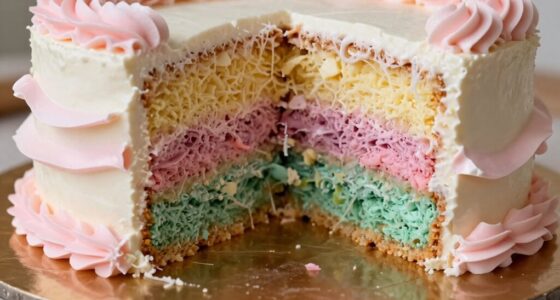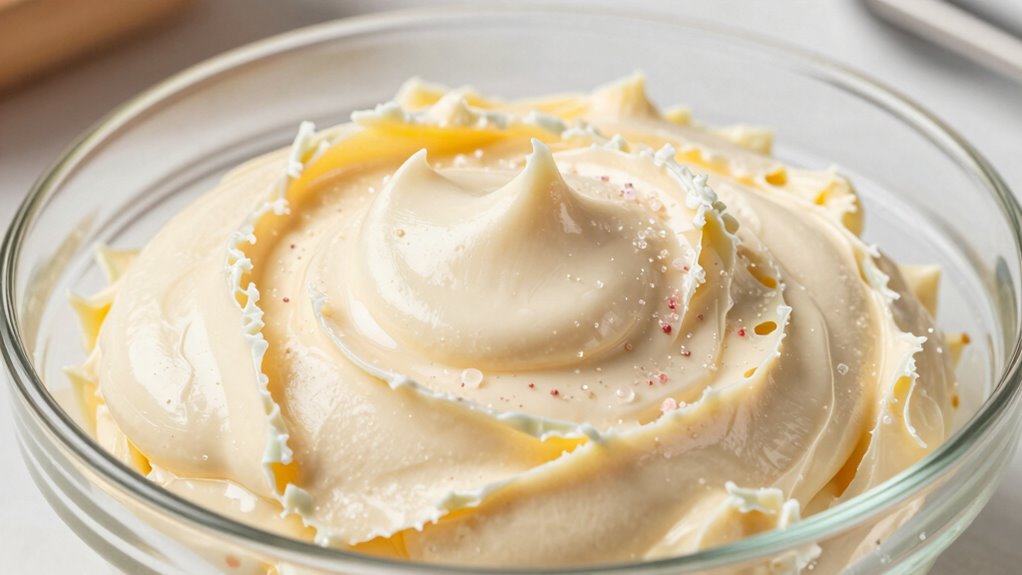

Grainy buttercream usually happens because of temperature problems, low-quality ingredients, or improper mixing. To fix it, beat the mixture longer at a steady speed, gradually adding small amounts of milk or cream if needed, to help smooth out the texture. Make sure your ingredients are at the right temperature and sift your powdered sugar beforehand. Keep these tips in mind, and you’ll find out how to prevent and correct graininess effectively.

Get baking supplies delivered free — and shop member deals
- Fast, free delivery on millions of items
- Access to Prime Big Deal Days deals on October 6–7
- Prime Video, Amazon Music and more included
Key Takeaways
- Continue beating the buttercream at higher speeds to help fats and sugars blend smoothly.
- Gradually add small amounts of milk or heavy cream to incorporate moisture and improve texture.
- Ensure ingredients are at proper temperatures: slightly soften butter and chill bowls if needed.
- Sift powdered sugar beforehand to eliminate lumps and promote even mixing.
- Use high-quality, fresh ingredients to prevent impurities and ensure a smooth, consistent buttercream.
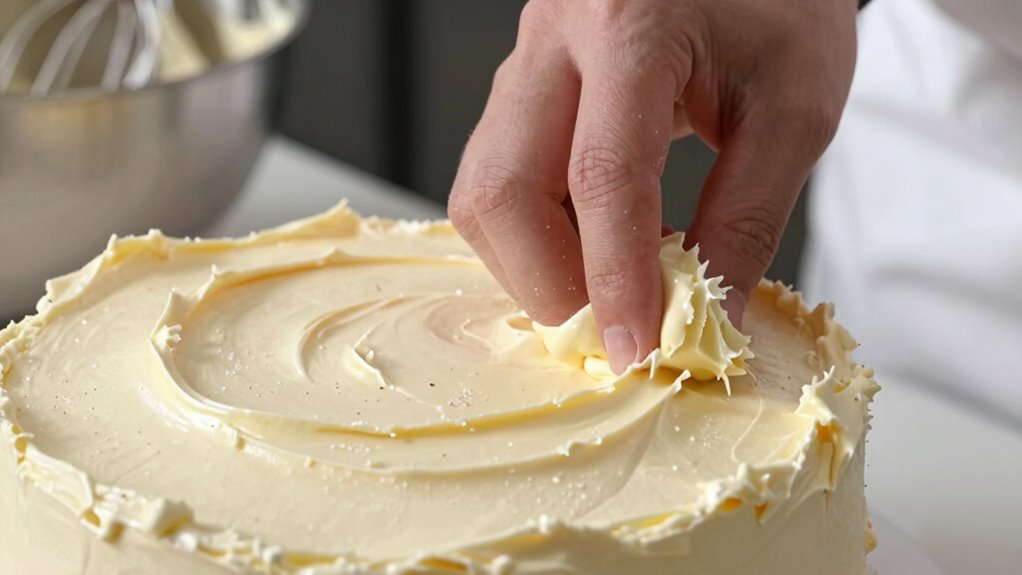
If your buttercream has turned grainy, don’t worry—there are simple fixes you can try. Graininess often happens because of issues with temperature control or ingredient quality, so understanding these factors can help you prevent it in the future. When your butter or sugar isn’t at the right temperature, it can cause the fats and crystals to separate, resulting in that undesirable grainy texture. Ensuring your ingredients are fresh and of good quality also plays a vital role; old or low-quality butter and sugar can lead to inconsistent mixing and graininess.
Grainy buttercream? Check ingredients and temperature for a smooth fix.
One of the first things you should do is check the temperature of your ingredients. If your buttercream is too cold, the fats in the butter won’t incorporate smoothly, creating a gritty feel. Conversely, if it’s too warm, the butter might become too soft or even start to melt, leading to separation. To fix this, try softening your butter slightly if it’s too cold, or chilling your mixing bowl and ingredients if they’re too warm. The goal is to maintain a consistent, moderate temperature to allow the fats and sugars to blend seamlessly.
Ingredient quality is equally important. Using fresh, high-quality butter and powdered sugar reduces the chances of graininess. Low-quality butter often contains more water or impurities that can cause uneven mixing. Similarly, old or cheap powdered sugar might have lumps or added anti-caking agents that interfere with smooth blending. Always sift your powdered sugar before adding it to your butter to eliminate lumps and promote even mixing. Good-quality ingredients melt and combine more predictably, resulting in a smoother, creamier buttercream.
If your buttercream is already grainy, one straightforward fix is to beat the mixture longer, gradually increasing the speed. Sometimes, extra mixing helps the fats and sugars come together more fully. If that doesn’t work, try adding a small amount of milk or heavy cream—just a teaspoon at a time—and continue beating. The added liquid can help loosen the mixture and smooth out the texture. Be cautious not to add too much, as it can thin out your buttercream.
high-quality powdered sugar for baking
As an affiliate, we earn on qualifying purchases.
As an affiliate, we earn on qualifying purchases.
Frequently Asked Questions
Can I Salvage Overmixed Buttercream?
Yes, you can salvage overmixed buttercream. First, check the butter consistency; if it’s too stiff, gently fold in a small amount of sugar alternatives or milk to loosen it. Avoid adding too much at once to prevent graininess. Keep mixing until it reaches a smooth, creamy texture. This method helps restore the buttercream’s smoothness without compromising flavor, making it perfect for decorating your cake.
What Types of Sugar Cause Graininess?
Like a mirror reflecting truth, poor sugar choices reveal themselves in grainy buttercream. Using low-quality powdered sugar or sugar with high crystallization tendencies causes this issue. When sugar crystallizes, it disrupts the smooth texture, making your frosting gritty. Opt for high-quality powdered sugar with fine consistency, and avoid coarse or poorly processed sugars to keep your buttercream silky and flawless. Quality ingredients truly make all the difference.
Is High Humidity Responsible for Grainy Buttercream?
High humidity can definitely cause your buttercream to turn grainy. The humidity impact introduces moisture effects that disrupt the smooth texture, making sugar crystals form more easily. When moisture from the air gets into your frosting, it can cause the sugar to dissolve unevenly or crystallize, resulting in that grainy consistency. To prevent this, keep your buttercream covered and work in a cool, dry environment to minimize moisture effects.
How Does Temperature Affect Buttercream Texture?
Think of buttercream as a delicate dance—temperature is your rhythm. When it swings wildly, it throws off your buttercream’s consistency, making it grainy or runny. Maintaining temperature stability keeps your frosting smooth and silky, like a well-choreographed routine. Too hot, and it melts; too cold, and it stiffens. By controlling your environment, you guarantee your buttercream stays perfectly textured, ready to impress without missing a beat.
Can Adding Milk Improve Grainy Buttercream?
Adding milk can help improve grainy buttercream by providing moisture adjustment, smoothing out the texture. When you notice graininess, gently mix in small amounts of milk until the buttercream becomes silky. The milk’s moisture helps dissolve the sugar crystals, creating a more uniform consistency. Just be cautious not to add too much, or you’ll risk thinning the frosting too much. Always add gradually for the best results.
electric hand mixer for buttercream
As an affiliate, we earn on qualifying purchases.
As an affiliate, we earn on qualifying purchases.
Conclusion
Now that you know how to fix grainy buttercream, you’ll be able to save your frosting and impress everyone with a smooth finish. Remember, about 60% of bakers experience graininess at some point—you’re not alone! Keeping your ingredients at the right temperature and mixing carefully can make all the difference. With these tips, you’ll create perfectly silky buttercream every time. Happy decorating!
As an affiliate, we earn on qualifying purchases.
cold and warm mixing bowls for baking
As an affiliate, we earn on qualifying purchases.
As an affiliate, we earn on qualifying purchases.
Halloween Picks
halloween
As an affiliate, we earn on qualifying purchases.