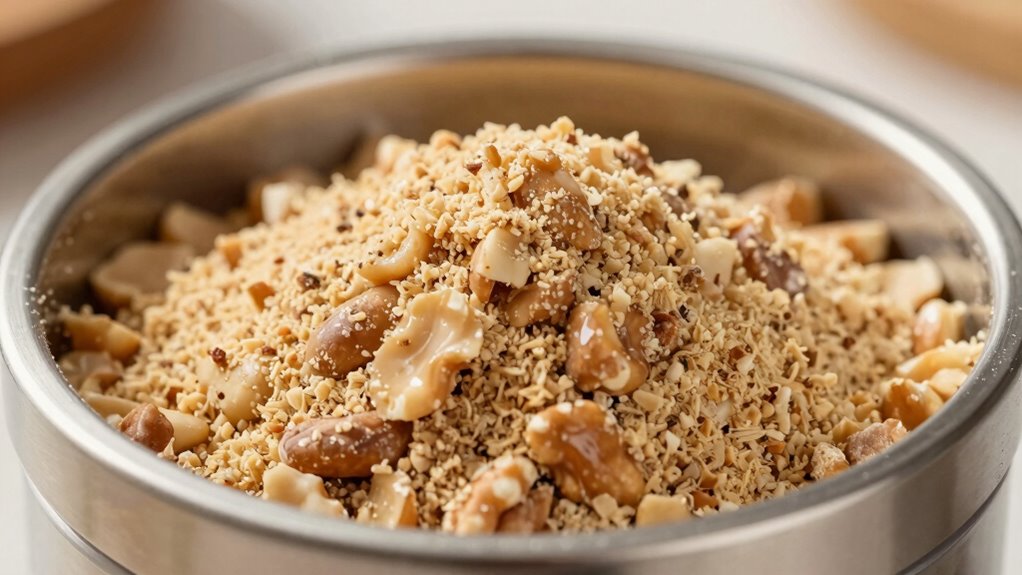

To avoid turning nuts into an oily paste when grinding for pastry, keep the process cool by using short pulses and stopping frequently to prevent heat buildup. Choose nuts that are properly dried or lightly roasted beforehand, remove skins to reduce oiliness, and process in small batches with a high-quality burr mill or a gentle food processor. Proper storage also keeps nuts fresh, ensuring they grind smoothly without excess oil. Discover more tips to perfect your nut paste techniques.
Key Takeaways
- Use short pulses in a food processor to control heat and prevent oil release.
- Roast nuts lightly and remove skins to reduce excess oil and improve texture.
- Keep nuts cooled before grinding and process in small batches for better temperature control.
- Choose burr grinders or manual methods over blade grinders for more uniform, cooler pastes.
- Avoid over-processing; pause frequently and scrape sides to prevent overheating and oily paste formation.
As an affiliate, we earn on qualifying purchases.
Why Do Nuts Turn Oily When You Grind Them?
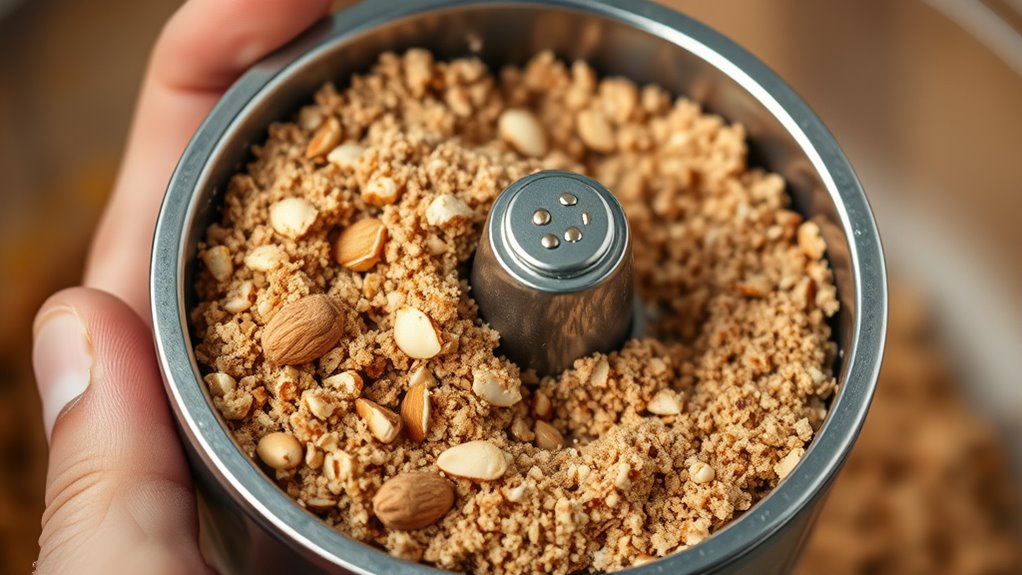
When you grind nuts, they often turn oily because their natural fats are released during the process. This nut oil release is influenced heavily by grinding temperature. As you grind, friction generates heat, increasing the temperature inside your machine or mortar. When the temperature rises too high, the nuts’ oil cells break down more rapidly, leading to a slick, oily paste. To prevent this, keep the grinding temperature low by pulsing the grinder or processing in short bursts. Using chilled nuts or cooling the equipment can also help maintain a cooler temperature. The goal is to grind just enough to break down the nuts without overheating them, which keeps the nut oil release minimal and preserves the desired texture for your pastry. Additionally, understanding the science of fats can help you better control the process and achieve the perfect consistency. Monitoring fats’ behavior during grinding can give insights into maintaining the ideal texture and preventing excess oil release. Recognizing the impact of temperature on fats can further assist in managing the temperature during grinding to avoid oil separation. Being aware of fats’ melting point can also guide you in managing the temperature during grinding to prevent oiliness. Furthermore, controlling the grinding technique is essential for optimal results and preventing a greasy paste.
As an affiliate, we earn on qualifying purchases.
Which Nuts Are Best for Pastry?
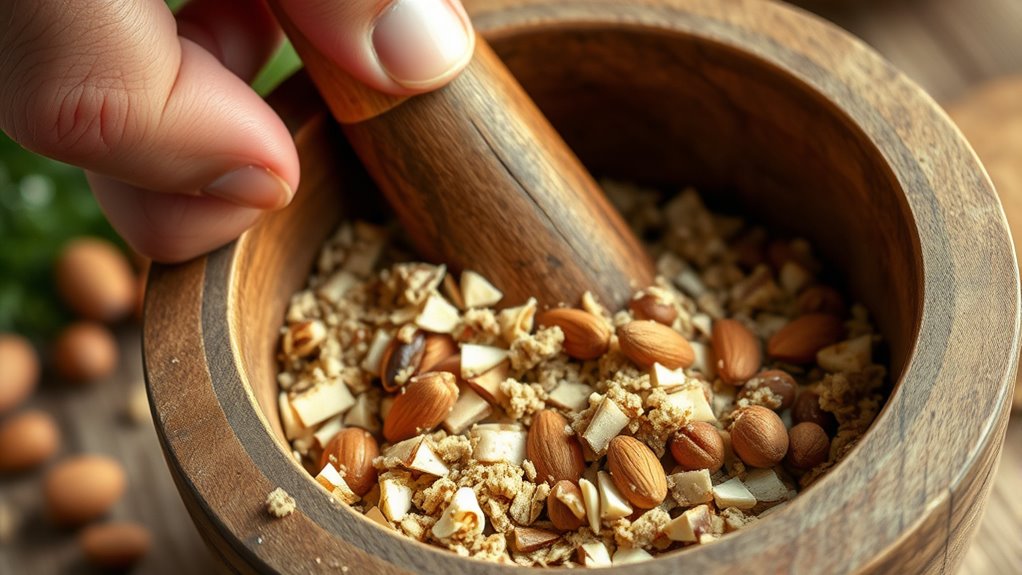
Choosing the right nuts for pastry depends on flavor, texture, and how they behave during grinding. For a balanced flavor enhancement, almonds are a popular choice due to their mild, versatile taste and smooth texture. Hazelnuts add a rich, nutty flavor that pairs well with chocolate and fruit pastries. Pecans offer a buttery, sweet profile, ideal for crumbly textures. Cashews bring a creamy consistency, perfect for smooth pastes. When selecting nuts, consider freshness and how they will impact your final product’s texture. Roasted nuts can boost flavor but may become oilier, so choose carefully. Additionally, understanding market trends and insights that can influence nut availability and pricing can help you plan your pastry projects more effectively. Proper storage techniques can also help maintain nut quality and prevent oil separation. Ultimately, your nut selection should complement your recipe and desired flavor profile, ensuring your pastry achieves the perfect taste and consistency.
electric nut processor for baking
As an affiliate, we earn on qualifying purchases.
As an affiliate, we earn on qualifying purchases.
How Can You Prepare Nuts Before Grinding?
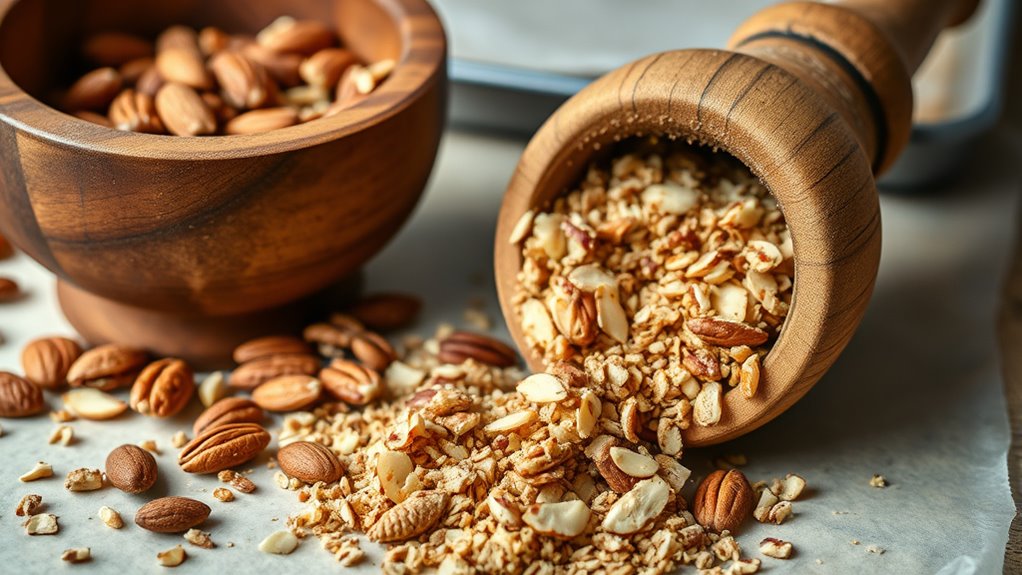
Preparing nuts properly before grinding guarantees you get the best flavor and texture in your pastry. Nut soaking can soften tough shells and reduce enzyme inhibitors, making grinding smoother and preventing oily pastes. Soak nuts in water for a few hours, then drain and pat dry thoroughly before use. Dry roasting is another effective method; it enhances flavor and reduces moisture content, which helps prevent oils from releasing during grinding. Spread nuts on a baking sheet and roast at a moderate temperature until fragrant, then let them cool completely. Proper preparation ensures you achieve a finely ground nut paste without excess oil, resulting in better pastry quality. Additionally, controlling moisture content through these methods helps maintain the oil balance in your nuts, ensuring a non-greasy paste. Ensuring optimal nut moisture levels can significantly improve the texture and consistency of your final product. To further reduce the risk of an oily paste, consider the temperature control during roasting, as high heat can cause nuts to release more oil. Using the right storage practices after preparation can also help preserve freshness and prevent excess oil release.
As an affiliate, we earn on qualifying purchases.
How Do You Grind Nuts Without Excess Oil?
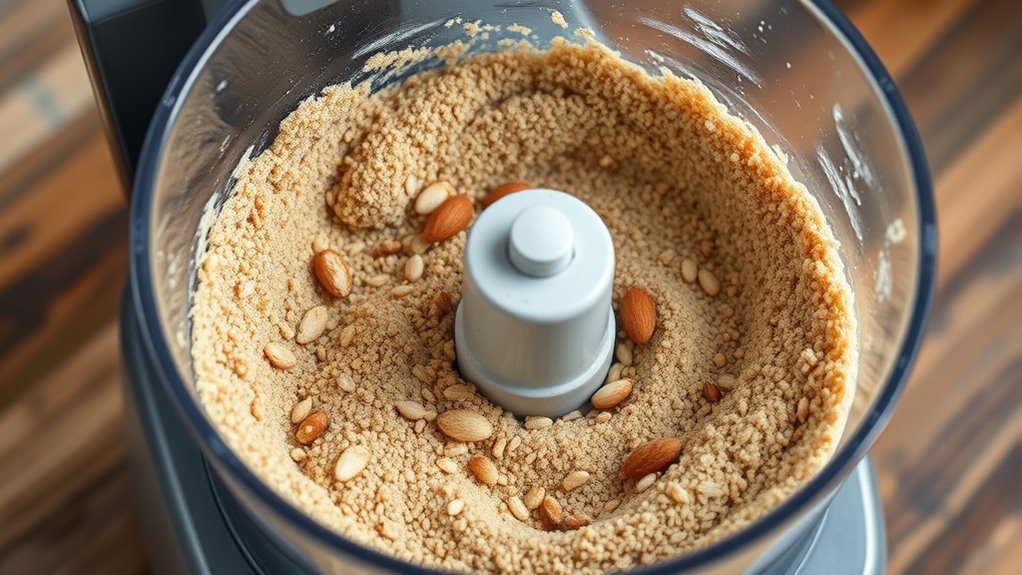
To grind nuts without ending up with excess oil, controlling the processing speed and duration is essential. Over-processing releases oil, affecting nut texture and creating a paste that’s too greasy. To prevent this, consider these tips:
Controlling processing speed and time prevents over-oiling when grinding nuts.
- Use short pulses instead of continuous blending to monitor oil extraction closely.
- Keep nuts cooled beforehand; cold nuts release less oil during grinding.
- Grind in small batches to maintain control over texture and prevent overheating.
- Be mindful of piercing care and hygiene to ensure your process remains clean and safe.
- Understanding exponential growth in processing can help you better time and control your grinding to avoid oil overrelease.
- Additionally, being aware of aero guardians and their guidelines on equipment maintenance can help ensure your appliances operate efficiently and prevent overheating that may cause excess oil release.
- Recognizing the importance of natural filtration systems can assist in choosing the best method to preserve nut quality during processing.
- Properly managing the power settings of your grinder can significantly influence oil extraction and prevent a greasy outcome.
These steps help you preserve the nut’s natural texture and minimize oil release. The goal is to achieve a fine grind without turning the nuts into an oily paste. By managing processing time and temperature, you’ll get the perfect consistency for your pastry without sacrificing flavor or texture.
What Equipment Works Best for Grinding Nuts?
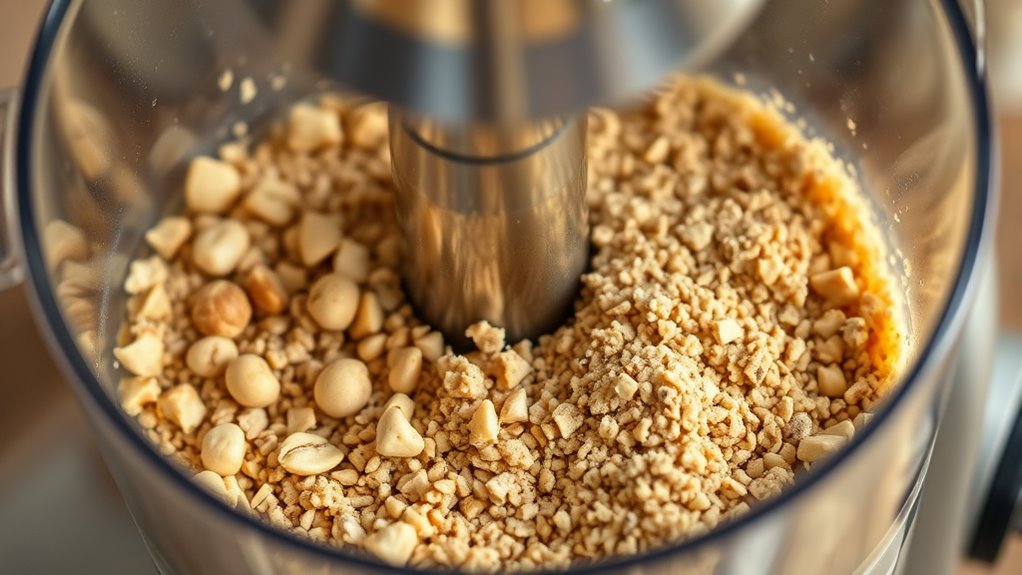
Choosing the right equipment makes all the difference when grinding nuts for pastry. You can opt for manual or electric grinders, each with their own advantages, or decide between blade and burr mills for different textures. Consider the size and capacity you need to handle your nut quantities efficiently. Selecting equipment that aligns with your routine can help you maintain control and prevent oily pastes, supporting a calm and organized kitchen environment. simple systems To further enhance your process, understanding consistent texture can help you achieve the best results for your pastry. Additionally, using vintage or retro appliances can add a charming touch to your kitchen while ensuring reliable performance. Incorporating appropriate safety measures can also help you operate your equipment more effectively and safely. Paying attention to seasonal maintenance can extend the lifespan of your equipment and keep it functioning smoothly.
Manual vs. Electric Grinders
When it comes to grinding nuts for pastry, the choice between manual and electric grinders largely depends on your needs and preferences. Manual grinders give you more control over texture and generate less heat, helping to prevent oily paste. They’re also portable and easier to clean, which supports proper nut storage and grinder maintenance. Electric grinders, on the other hand, save time and effort, ideal for larger quantities or frequent use. Consider these factors: 1. Control vs. Convenience: Manual offers precision, electric offers speed. 2. Frequency of Use: Electric is better for regular baking. 3. Cleaning & Storage: Manual grinders are simpler to clean and store, reducing oil transfer risks. Proper nut storage can also help maintain freshness and prevent moisture buildup that may affect grinding quality. Additionally, selecting a grinder with consistent performance can improve your results and prevent the nuts from becoming overly oily or paste-like. Being mindful of the plant properties of the nuts, such as oil content, can also help you achieve the desired texture while minimizing the risk of an oily paste. Choose based on your baking volume and how much effort you’re willing to invest in maintenance and nut storage.
Blade vs. Burr Mills
Both blade and burr mills are popular options for grinding nuts, but they perform quite differently depending on your baking needs. Blade mills use rapid spinning blades that chop nuts quickly, producing a coarse to medium grain texture. This method is fast but can generate heat, which may affect flavor extraction and cause oils to release prematurely, risking an oily paste. Burr mills, on the other hand, grind nuts slowly through precision burrs, resulting in a more uniform, fine texture. They operate at lower temperatures, helping preserve flavor and prevent oils from releasing too early. If you want consistent, control over grain size and ideal flavor extraction, burr mills are the better choice. For quick, coarse grinding, blade mills work well but require careful monitoring to avoid oils and paste formation.
Size and Capacity Options
Selecting the right equipment for grinding nuts depends largely on the size and capacity you need. If you’re working with small nut batches or fine powders, a small food processor or spice grinder offers precise control. For larger quantities, a high-capacity blender or dedicated nut grinder provides more efficiency. Consider nut size; smaller nuts grind more evenly in burr mills, while larger nuts may require a stronger motor. Capacity options vary from mini units ideal for home baking to industrial models suited for large-scale pastry production. When choosing, think about how much you need to process regularly and the desired consistency. Proper equipment guarantees you avoid oily pastes and achieve a perfect, uniform nut grind every time.
How Can You Achieve a Fine, Oily-Free Nut Paste?
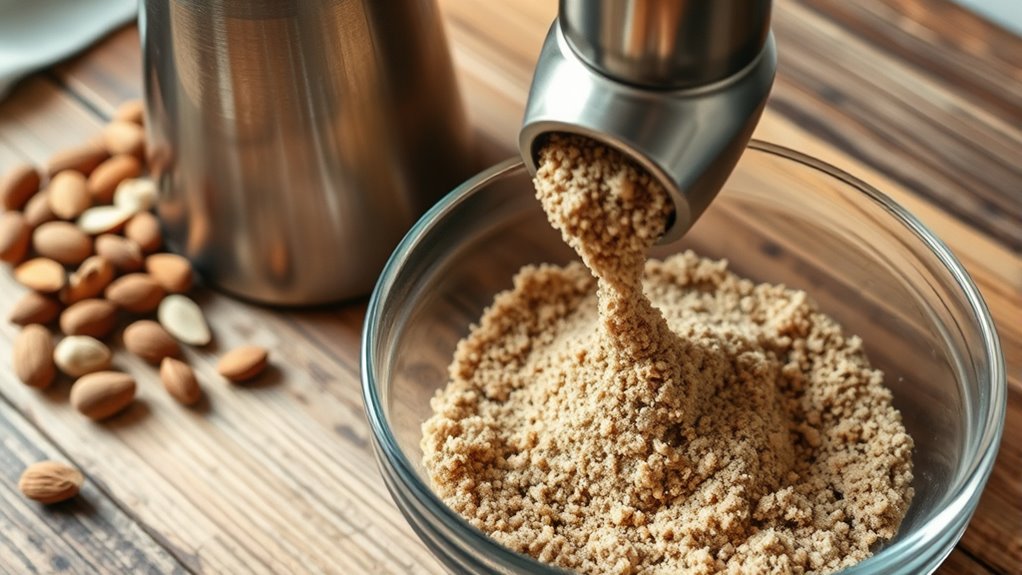
To achieve a fine, oily-free nut paste, start by lightly roasting the nuts to boost their nut flavor and loosen their skins. Once cooled, rub the nuts gently to remove any remaining skins, which can cause an oily texture. When you grind the nuts, aim for a consistent, even texture—using short bursts if you’re using a food processor—to avoid overheating, which can release excess oils. Keep the grind controlled to prevent the paste from becoming greasy or pasty. If the mixture starts to release oil, pause and scrape down the sides. Using a pulse method helps manage the grind consistency, ensuring you get a smooth, fine paste without oil separation. This approach preserves the nut flavor while keeping the paste light and non-oily.
How Should You Store Nuts to Keep Them Fresh?
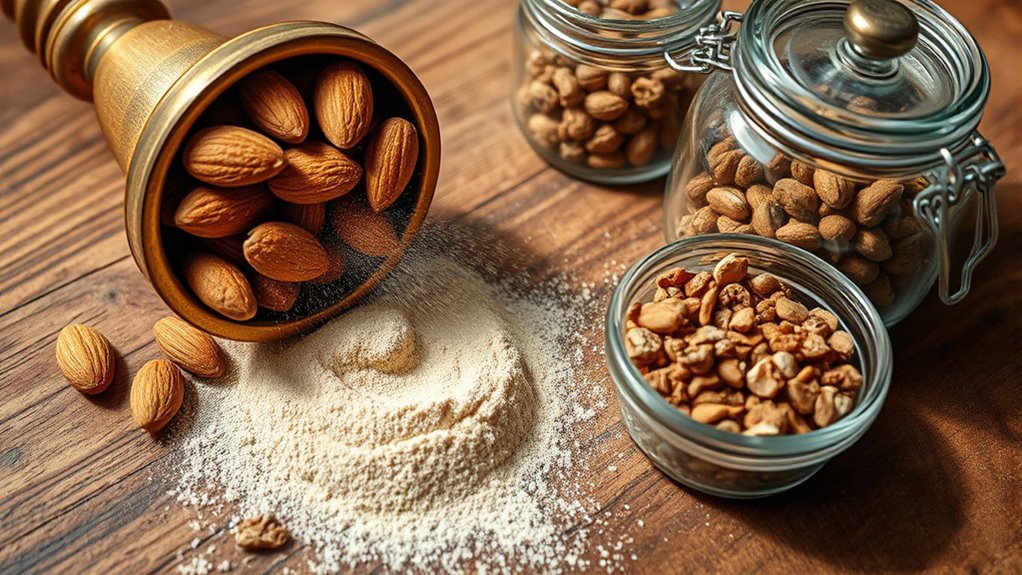
Proper storage is essential to keep nuts fresh and flavorful for as long as possible. To maximize their shelf life, follow these tips:
- Store nuts in an airtight container to prevent exposure to air and moisture.
- Keep them in a cool, dark place like a pantry or refrigerator, as heat accelerates spoilage.
- For extended freshness, consider freezing nuts in a sealed bag; they can last up to a year.
Nut storage conditions directly impact their shelf life. Properly stored nuts retain their flavor and texture longer, preventing rancidity. Avoid warm, humid environments that can cause nuts to spoil quickly. By following these simple steps, you ensure your nuts stay fresh and ready for grinding into perfect pastry ingredients.
Frequently Asked Questions
Can Roasting Nuts Before Grinding Reduce Oiliness?
Roasting nuts before grinding can indeed help reduce oiliness. When you nut roast, the heat releases some oils, allowing you to better control oil content during grinding. This process promotes oil reduction, resulting in a less oily paste. Keep the roasting light to avoid burning, and let the nuts cool completely before grinding. This simple step enhances texture and helps you achieve a more manageable, less greasy nut paste.
Are There Specific Brands of Nuts Better for Pastry?
You should choose high-quality nuts for pastry, as better nut quality means less oiliness and a better flavor. Look for brands that prioritize freshness and minimal additives. Store your nuts in airtight containers in a cool, dark place to maintain their quality and prevent rancidity. This way, when you grind them, you’ll get a consistent texture without excess oil, ensuring your pastry turns out perfect every time.
How Does Nut Moisture Content Affect Grinding Results?
Nut moisture content considerably impacts your grinding results; higher moisture levels can make nuts clump and result in uneven grinding, affecting consistency. To achieve a smooth, even paste, you want nuts with low moisture content, ideally around 4-6%. If your nuts are too moist, consider drying them slightly before grinding, or use a pulse method to better control the grinding process and maintain consistent texture.
Is It Better to Grind Nuts in Small Batches?
You should definitely grind nuts in small batches to guarantee consistent results. Smaller batch sizes improve grinder performance by preventing the nuts from overheating or clumping, which can lead to an oily paste. You might notice that when you grind too many nuts at once, the texture becomes uneven, and the machine struggles. By working in smaller batches, you maintain better control and achieve the perfect, crumbly nut texture for your pastry.
Can Adding a Small Amount of Oil Improve Grinding?
Adding a small amount of oil can improve grinding consistency by reducing oil absorption and preventing the nuts from becoming too dry or sticky. This helps you achieve a smoother, more uniform paste without over-oiling, which can lead to an oily texture. Use just a tiny bit at a time, and pulse gently. This way, you control the consistency and avoid making the paste excessively oily or greasy.
Conclusion
Think of your nut paste as a delicate dance—you want every step to be smooth and graceful. By choosing the right nuts, preparing them properly, and using the best equipment, you keep your paste light and oil-free. Store your nuts carefully, so they stay fresh for your next baking adventure. With these tips, you’ll turn grinding into a symphony of flavor, not a greasy mess. Now, go create pastry perfection with confidence!